|

Comtech Research
Your Source For
Indoor Air Quality
Since 1989
|
 Air
Oasis™
Air Purifiers Air
Oasis™
Air Purifiers
Ultraviolet Air Purifiers with Catalyst technology
|

|
Phone orders: 866-466-4937
|
NEWS
|
|
|
|
|
Air Oasis Authorized Retail
Dealer
 Air
Tester Air
Tester
Ozone
tester
Products
Ordering
info
Contact
Us
Site
Map
Search
Home
Back
Three-Year
Manufacturer's
Warranty
Air Oasis is Great for Odors!
DESTROYS GERMS.
Air Oasis Ultraviolet air purifiers
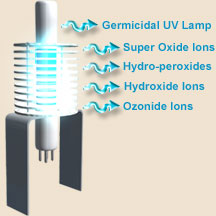
converts most ozone to safer ions, such as hydro peroxides (H2O2),
hydroxyl ions (OH-), and super oxide (O2-) ions.
Patented AHPCO UV light catalyst
process uses special broad-spectrum ultraviolet
light shining on many coated metallic discs containing five special
catalysts.
 Play the Air Oasis 3000 Video
Why
the AHPCO™ Cell Purifies Air So Effectively.
|
SPECIAL ORDER
Please call during business hours to order.
Air Purifier Technology Breakthrough
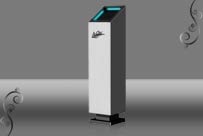
Top-of-the-line Air Purifier Helps Eliminate:
- Bacteria - Germs - Viruses
- Mold Spores - Fungus - Yeasts
- Odors - VOCs - Allergens
... From the Air in Your Home.
See Proof.
All Air
Oasis Air Purifiers contain catalytic molecule coatings.
Have you ever wanted to receive
all the benefits of ozone generating air purifiers without the
high levels of ozone? Our team at Air Oasis has spent countless
hours researching the solution and it's now available to you!
The Air Oasis air purifier line doesn't
use dangerous levels of ozone. Our air purifiers convert most ozone
to safer and more effective ions. Our air purifier technology
is so effective at converting ozone, that the ambient levels
in your home, even one foot from the air purifier, would have
to be measured in parts per billion. Our five redundant oxidizers
are also much more effective than ozone alone. Learn why our ions are safe.
|
|
Home and Light Commercial Air
Oasis air purifiers |
|
NO LONGER
AVAILABLE
Covers
Up To 500
square feet
Air Oasis
500
UV Air Purifier
With
Patented Catalysts
$299
After automatic 10% discount
|
Covers
Up To 1000
square feet
Air Oasis
1000
UV Air Purifier
With
Patented Catalysts
$399
After automatic 10% discount
|
Covers
1000 to 3000
square feet
Air Oasis
3000
UV Air Purifier
With
Patented Catalysts
$499
After automatic 10% discount
|
For Highly Polluted Areas
1500-3000 square feet
Air Oasis
3000Xtreme
UV Air Purifier
With
Patented Catalysts
$549
After automatic 10% discount
|
|
|
 |
 |
|
|
Air Oasis™
500 Air
Purifier
This air purifier is ideal for
areas Up To 500 square feet.
(Formerly called the Air Oasis Mini)
Utilizes
AHPCO Cell technology.
It is capable of not only sanitizing your air, but also killing surface
mold, bacteria, viruses etc. With our advanced AHPCO technology
the Air Oasis 500 air purifier will provide all the benefits
of ozone air purifiers without using higher and potentially
dangerous levels of ozone. |
Air Oasis™ 1000 Air
Purifier
This air purifier is ideal for areas up to to 1000 square feet.
Utilizes
the same great AHPCO Cell technology found in the 3000 model
but in a slightly smaller package covering up to 1000 square
feet.
It is capable of not only sanitizing your air, but also killing surface
mold, bacteria, viruses etc. With our advanced AHPCO technology
the Air Oasis 1000 air purifier will provide all the benefits
of ozone air purifiers without using higher and potentially
dangerous levels of ozone. |
Air Oasis™ 3000 Air Purifier
This air purifier
is ideal for larger areas up to 3000 square feet, or areas as
small as 1000 square feet with higher pollutant levels.
Read why the AHPCO cell is so effective.
It is capable of not only sanitizing your air, but also killing surface
mold, bacteria, viruses etc. With our advanced AHPCO technology
the Air Oasis 3000 air purifier will provide all the benefits
of ozone air purifiers without using higher and potentially
dangerous levels of ozone.
Play the Air
Oasis 3000 Video
|
Air Oasis™ 3000X Air Purifier
Light Commercial air purifier intended for
larger areas (approx 1500-3000 square feet) with higher contamination (strong
odor problems).
If this is not your situation, then you may have to run it occasionally and/or
move it around instead of leaving it on all the time to prevent too strong of a concentration in small or low
contamination areas.
Read why the AHPCO cell is so effective. |
Air Purifier Benefits
The Air Oasis 500 uses our proprietary AHPCO
technology.
For rooms up to 500 square feet.
The air purifier is virtually silent.
This air purifier operates on pennies.
There is no maintenance on the air purifier for 3 years.
Each air purifier is made of artistic brushed aluminum.
Reduces mold, bacteria, viruses, odors and VOCs quickly.
Three year manufacturer's warranty.
30-day satisfaction guarantee.
|
Air Purifier Benefits
The Air Oasis 1000 uses our proprietary AHPCO
technology.
For rooms up to 1000 square feet.
The air purifier is virtually silent.
This air purifier operates on pennies.
There is no maintenance on the air purifier for 3 years.
Each air purifier is made of artistic brushed aluminum.
Reduces mold, bacteria, viruses, odors and VOCs quickly.
Three year manufacturer's warranty.
30-day satisfaction guarantee.
|
Air Purifier Benefits
The Air Oasis 3000 uses our proprietary AHPCO
technology.
One air purifier can cover large areas.
The air purifier operates with little noise.
This air purifier operates on pennies.
There is no maintenance on the air purifier for 3 years.
Each air purifier is made of artistic brushed aluminum.
Reduces mold, bacteria, viruses, odors and VOCs quickly.
Three year manufacturer's warranty.
30-day satisfaction guarantee.
|
Air Purifier Benefits
The Air Oasis 3000Xtreme
light commercial purifier uses our proprietary AHPCO
technology.
One air purifier can cover large areas with stronger odors.
The air purifier operates with little noise.
This air purifier operates on pennies.
There is no maintenance on the air purifier for 3 years.
Each air purifier is made of artistic brushed aluminum.
Reduces mold, bacteria, viruses, odors and VOCs quickly.
Three year manufacturer's warranty.
30-day satisfaction guarantee.
|
Air Oasis 500 Specifications: |
Air Oasis 1000 Specifications:
|
Air Oasis 3000 Specifications:
|
Air Oasis 3000Xtreme Specifications:
|
|
Air Oasis 5000
Commercial
Air Purifier
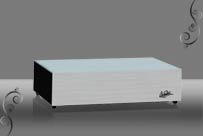
Coverage: Up to
5000 sq. ft.*
Dimensions: 18" x 6" x 4"
Electrical: 115VAC 104 Watts
Replacement cell: AHPCO-5009
$749.99
 Brochure
Manual
*
Areas of higher contamination
or closed floor plans
may require multiple units
to cover suggested sq.
ft.
|
Air purifiers have a fundamental flaw. They rely on air being pulled
through the unit in order to clean it. This creates an ineffective,
high energy cost air purifier. Our air purifiers utilize a new
generation of technology. This technology does not reply on filters or air passing through the
air purifier. This new technology simply produces a blanket of
redundant oxidizers that not only clean your air, but sanitize
surfaces as well. The proprietary patent-pending Air Oasis nano Nickel HCT catalyst is
superior to any PCO catayst currently on the market. Imitation air
purifiers use cheap titanium dioxide (TiO2) alone as a catalyst.
TiO2 is the cheapest, most available, catalyst metal on the market.
It's often used as the white pigment in standard house paint costing
only pennies. The nano Nickel HCT contains five rare catalyst
metals. We also use nano size metals to increase the kinetic rate of
reaction. Our UV lamps utilize a proprietary long life coating
allowing them to outlast any UV lamp on the market. Don't be fooled
by cheap imitations. By utilizing a broad-spectrum 254 nm UV light we achieve the same
oxidizing and ionizing benefits found in nature, created by the sun.
By combining the UV light with our patent-pending nano Nickel HCT™
catalyst we achieve unparalleled results.
Warning to All Buyers of PCO Air Purifiers!
There are many "knock off" air purifiers on the market that claim to
use PCO (Photocatalytic Oxidation) technology. If not used properly PCO technology will do
little to purify your air. In fact it can cause an increase in
harmful contamination.
Researchers have found with many PCO air purifiers that because of
incomplete decomposition of the VOC's in the air stream there is a
net production of formaldehyde, acetaldehyde, formic acid and acetic
acid. Of particular concern was that the outlet concentrations of
formaldehyde and acetaldehyde were 3.4 and 4.6 times the inlet
concentrations, respectively. Both formaldehyde and acetaldehyde are
recognized as important indoor toxicants. Formaldehyde is classified
as a human carcinogen. Governmental guidelines suggest keeping
indoor concentrations of formaldehyde and acetaldehyde at very low
levels.
Many brands of air purifiers are beginning to use cheap imitations
of PCO technology in their product. Most use cheap titanium dioxide
(the basic white pigment in paint) as their catalyst. They then
combine this with a cheap foreign UV lamp and call it a PCO air
purifier. These air purifier will not usually provide any University
studies to validate any claims.
Air Oasis developed a proprietary patent-pending five metal nano
catalyst that is far superior to any cheap imitations on the market.
Our UV lamps use a proprietary long life coating to more than double
their life over the competition. Preliminary results from West Texas
A&M University show huge reductions in formaldehyde and other VOCs.
Rapid reductions in odors where also observed. We will be posting
the final results when all testing is concluded.
Don't risk your family's health and waste your hard earned money on
cheap imitations.
Buy only the best! Buy an Air Oasis!
Are Air Purifiers Better Than HEPA Filters?
By Jeanie Wong
Platinum Quality Author
HEPA air purifiers have been on the market for a while, but there
have also been some recent advances made in air purification
technologies as of late. Many air purifier manufacturers are now
utilizing Photocatalytic Oxidation (PCO) technology as a way of
removing toxins from the air. This purification method may be the
most advanced one yet, and some leading air purifier manufacturers
are beginning to add PCO air cleaners to their product lines.
For years, has been FDA approved for reducing bacteria in meat
processing plants, and it is even used to cleanse pesticides from
the fruits and vegetables we eat. Essentially, filtration can be
summed up as such: An intense light is reflected onto a metal
surface which in turns oxidizes toxins from the air. In chemistry,
photocatalysis is defined as the acceleration of a photoreaction in
the presence of a catalyst, and an example of this would be the
oxidation of organic contaminants such as bacteria and mold using
magnetic particles coated with titanium dioxide nanoparticles, and
agitated using a magnetic field that is exposed to UV light.
Therefore, this type of air purification technology converts harmful
particulates and toxic gases into safer compounds such as carbon
dioxide and water. Air purifiers use broad-spectrum UV light which reacts with a thin
film of catalyst which, in the presence of water, creates hydroxyl
radicals and super-oxide ions that "burn" VOCs and microorganisms
adsorbed on the catalyst's surface. With that in mind, many
consumers may mistake UV air purification with technology, and
rightfully so. However, while both types of air purifiers are
similar in that they harness the oxidation properties of ultraviolet
light, purification systems utilize UV lamps with additional
wavelengths. These additional wavelengths ensure a quicker reaction
rate when it comes the degrading of toxic compounds that are
polluting the air you breathe.
Because PCO technology is an extremely powerful purification method,
PCO air purifiers have the ability to eliminate particles as small
as 0.001 microns, including the tiny penetrating particles that can
absorb into your lungs and cause damage (HEPA filters are only able
to filter out particles as small as 0.3 microns). Studies have also
shown that in addition to VOCs, toxic gases, and chemicals,
photocatalytic air purifiers can also render gases like carbon
monoxide and nitrous oxide harmless - pollutants which can often
escape standard air purifiers utilizing HEPA or ionic technology
alone. Those concerned with the possible health effects associated with air
purifiers will be glad to know that PCO air cleaners have been found
to be much safer than ozone and ionization, and they work
wonderfully well for those with asthma, allergies, and multiple
chemical sensitivity.
Jeanie Wong is a marketing writer with extensive
knowledge of heating, cooling, and air purification systems.
Article Source:
http://EzineArticles.com/?expert=Jeanie_Wong
|
|
Air Quality
Test Kit
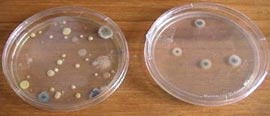
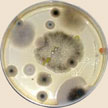
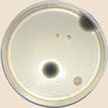
Most people are shocked to to see the results.
Test your air for mold, bacteria and yeast. You might need an air purifier.
2 tests per pack.

Ozone Test Kit
Are you concerned about ozone or use a competitor's
air purifier that produces ozone? Make sure the ozone levels in your
home are safe.

|
Why is the Air Oasis Air
Purifier So Effective?
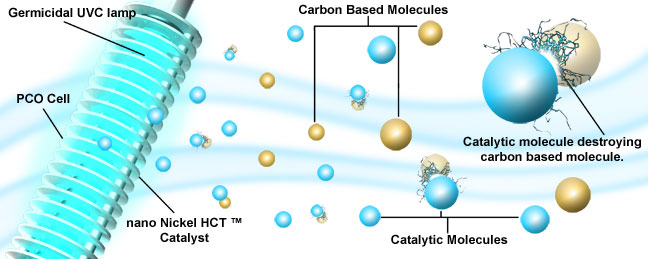
How Air Oasis Patent-Pending AHPCO Technology Works
 Air
Oasis Technology Summary Air
Oasis Technology Summary
AHPCO ™, is an
Advanced Hydrated Photocatalytic Oxidation technology. Basically,
it is a broad-spectrum high intensity UV light targeted on a quad
metallic catalyst in a low-level ozone and moist atmosphere. This
creates an advanced oxidation of friendly oxidizers. Unlike ozone,
these oxidizers are safe, but yet aggressive at killing mold, bacteria,
viruses and more. They also effectively neutralize odors and VOCs.
Once they have done their job they revert back to oxygen and hydrogen. AHPCO technology has been successfully used in water, air, food
and laundry applications.
Development
The UV light and ozone are not new discoveries. Ozone was first
discovered in the late 1800's and used as a water purifier in Europe.
UV light was discovered in the 1930's. Actually, nature discovered
it before; it was called the "sun". The disinfection qualities of
UV light are also not new. Hospitals have used UV light for decades
in operating rooms. Barbers were disinfecting combs in the 1950's
with UV light. What is new is the enhancement of both these natural,
friendly oxidizers and the validation for use on air, water, food
and laundry.
History of Air Systems
In the mid-1980's air purifiers started to make their way into the
residential market. Ozone air systems were widely used in the commercial
restoration business for fire and flood damage to buildings. These
applications utilized corona discharge systems (CD) that use a spark
or electrically charged plates to simulate lightning. This converted
the oxygen (O2) to ozone (O3). The CD method creates very high concentrated
ozone. Plus by using air as the oxygen source, you are receiving
20% oxygen and 80% nitrogen. The problem with CD systems is with
oxygen conversion you also get a nitrogen conversion, which makes
nitric acid and nitric oxide.
The problem
facing the residential air systems was that the cost of an oxygen
generator was so high they went without one. This, of course, created
a CD unit that produced high concentrated ozone plus low levels
of nitric oxide and nitric acid. The maintenance was a problem due
to the corrosive nature of nitric acid and the high concentration
of ozone exceeding the Federal safety limits of .04 ppm. Ozone readings
at the exhaust have exceeded 10 ppm, which is potentially lethal.
Air Oasis decided to stay out of this dangerous market.
In the late
1980's it was discovered that the lower concentration of ozone could
have an effect on odors, mold and bacteria. Testing this theory,
determined that safe, low levels of ozone could have a significant
result with airborne mold, odors and bacteria. The problem was to
create a safe residential air purifier that could produce safe,
low concentrations of ozone that would not exceed the .04 ppm Federal
limits. This was accomplished in the early 1990's, about the same
time as the Federal Government was going after the ozone residential
units. This battle of the Feds and manufacturers gave ozone a very
bad name.
With the technology
to build a device that produces safe, low concentrations of ozone
and the ability to ensure a room would not exceed .04 ppm, it was
time to set out to validate the use of this device on mold, VOC's,
odors and bacteria. Fox TV News was doing a three-part series on
indoor air problems and tested one of the ozone units. The unit
they had tested was producing 18 ppm ozone, a lethal amount that
drove the camera crew and news reporter right out of the office.
Enter the Air Oasis AHPCO Cell
Technology
The Fox people then asked if they could independently test the AHPCO
technology. They ran tests supervised by an independent air specialist
and two medical doctors. The series turned out to be a fantastic
infomercial for this technology. The results couldn't have been
better. Fox ran this on their national news network and their national
health news. Popular Science picked up the story for the magazine
and ran it on the Popular Science TV Show.
In 2003 the
AHPCO Cell was developed. Rhodium was now added as a catalyst and
improved hydration compounds were also added. Plus, a total new
target concept was used. A 360 degree cell provided maximum exposure
of the catalysts. The bulb was reworked and a HE/UV broad-spectrum
bulb with a heavy duty filament and long life coating was developed.
This gave the new AHPCO Cell an unprecedented 3 year, 25,000 hour
life. This was a major improvement over the current standard 8,000-10,000
hour UV bulb life. The most important improvement was the efficacy,
the new cell design created more hydro peroxides, super oxide ions
and ozone levels were .01-.015 ppm or less. Country or forest air
is usually around .01-.02 ppm of ozone. Most people can smell ozone
at .01 ppm, and .05 ppm is the federal safe limit for medical devices.
The new cell also produces hydroxide ions and ozonide ions which
broadened the scope of capabilities.
By using a
AHPCO™ Cell with redundant oxidizers our scope of effectiveness
is widely broadened.
In March of
2006 a new catalyst coating was introduced.
With this new patent-pending coating a fifth powerful catalyst metal
was added. We also reduced the particle size of our metals down
to a nanosize particle in order to increase the surface area and
therefore increase the kinetic rate of reaction. The hydrophilic
gel was also improved to further hydrate the coating and react in
combination with the metal catalysts (by donating hydrogen to the
ozone) to decompose ozone to form hydroxide ions, and radicals,
as well as hydro peroxides, such as the HO2 radical and hydrogen
peroxides, which are desirable reaction products from the decomposition
of ozone due to their strong oxidizing properties, which enhances
the germicidal effect of UV radiation.
While competitors
are using TiO2 alone with no hydrating agents or other less effective
catalyst coatings, Air Oasis is setting the trend for the next generation
of air purifiers.
|
How The Air Oasis™ Air Purifiers Work
The Air Oasis™ air purifiers utilize state-of-the-art
technology unique to any product currently on the market today:
AHPCO™ Cell (Advanced Hydrated Photocatalytic
Oxidation Cell) - The next generation in catalytic oxidation.
The AHPCO™ Cell technology is far superior
to the older stand alone UV lamps and catalytic oxidation methods
with only one catalyst used in competitor air purifiers. This
is the latest advanced oxidation technology that consists of
a proprietary, high-intensity broad-spectrum UV lamp in a hydrated
catalytic cell. Low-level ozone is produced in the cell, the
majority of which is converted into airborne hydro peroxides
(H2O2), hydroxyl ions(OH-), super oxide ions(O2-) and ozonide
ions(O3-) via the quad-metallic catalyst. These friendly cleansing
ions treat your indoor air by:
- Suppressing bacteria growth (bacteriostatic)
- Suppressing mold growth (mycostatic)
- Suppressing viruses
- Suppressing VOCs (Volatile
Organic Compounds)
- Reducing odors
- Reducing small particles
(for larger particles, such as pet hair,
a filter is recommended)
Pros over competition:
Low cost, no yearly maintenance, no installation, airborne hydro
peroxides, super oxide ions and hydroxide ions travel through the
house providing 24-hour protection against airborne mold, bacteria,
viruses, odors and VOC's. The cell also acts as a germicidal lamp
and treats the air that passes by it.
The hydro peroxides and super oxide ions will
radiate through an entire house providing 100% silent air purification.
For faster and improved results in areas of high contamination an
extremely quiet fan is included on the 3000 and 1000 models.
Air
Test kits
Ozone
test kits
Send us your Air Oasis air purifier
testimony.
We have had many testimonials pouring in about the great
results people are receiving with their Air Oasis™ 3000
air purifier. We would like to hear your story as well.
To send us your testimony simply e-mail
us.
Air Oasis™ 3000
Air Purifier Testimonials
"I
have to admit I was skeptical when I ordered the Air Oasis™
air purifier. I had been suffering with allergy type symptoms
when I would go to bed for almost a year and a month ago reached
my breaking point with the annoying cough and scratchy throat.
Throughout that year I have been researching the different home
units available and was not impressed with any of them but decided
that I would have to make the big purchase and just try one.
As fate would have it, the day I was doing my final comparison
analysis I stumbled across the Air Oasis™ 3000. What sold me
was the inclusion of actual percent reduction test results for
the different air pollutants typically found in houses. Also,
providing air testing kits to validate your product in the consumer's
residence is definitely 'putting your money where your mouth
is'. I have included a photo of my test results and will be
ordering another unit for the first floor of my house. Likewise,
I will be highly recommending your unit to friends and family.
"Thanks for the restful nights."
Mark B.
"My family and I just moved
into a new home three weeks ago. We are very health oriented
people and want our children to have the best chance at life
that we can provide. We have been hearing more and more about
the poor indoor air quality in most homes today and decided
to try your Indoor Air Quality Test Kit. I figured since our
home was new that the air must be great. Boy was I wrong! After
seeing the results I was almost afraid to take another breath.
My husband and I decided to purchase the Air Oasis™ 3000 air
purifier at once. We took your advice and after using the unit
for six days we retested in the same room. They say a picture
is worth a thousand words, so I will let the before and after
pictures I have included do the talking. I only wish we would
have purchased one sooner.
Thank you Air Oasis"
April B.
PS Get ready for referrals,
because I am showing everyone my pictures.
"Dr. Jeff,
I had to write to tell you about my experience so far with your
Air Oasis units. First of all, I was so excited about receiving
them that I did not even do the air tests that I had ordered.
I wanted to be able to use the units immediately, so I decided
not to do the air test!
I put one unit downstairs and one unit upstairs as you suggested.
It was the perfect time to test your product because we were
dog sitting for my sister at the time. We have our own large
dog, but for two weeks, we were also dog sitting for two additional
dogs. We have been having a ton of rain, hence, the house smelled
of wet dog for days!
It took about two days after we began using your units, and
the smell of the dogs was completely gone! We did another test
when my wife spilled a whole jar of jewelry cleaner in her closet.
There was such a strong smell of ammonia that it was overbearing.
I placed a unit right in front of her closet and we left for
the evening. When we returned, the strong order was completely
gone.
I have been extremely happy with the Air Oasis and the bonus
is that I don't even have to worry about cleaning it for three
years!
Thanks again for your product. As I mentioned earlier, I'd love
you to keep me posted on your distributor program if that comes
to pass. I am looking into mass media marketing for another
product and if that works out, I'd love to see if I can do the
same for Air Oasis."
Ricky P.
"After having used the Air Oasis
3000 Air Purifier for two months in the bedroom it has stopped
my nasal drainage and a hacking cough. The air seems fresher.
It seemed to have started working the second day."
Jack S.
St. Louis, MO
"A friend recently let me use
their Air Oasis 3000 in my home so I could decide if I wanted
to purchase one. The night I first placed the unit in my home
I could hardly breathe. I think I had a sinus infection. It
was suggested for me to stay close to the unit for awhile to
help clear up my infection. I never took that piece of advice.
The next night I was still having problems sleeping because
of the sinus problems. I decided to go and lay on the couch
so my husband could get some rest. The next morning I awoke
and the infection was gone! I could breathe again! I then realized
the couch I had been sleeping on was about two feet away from
the Air Oasis air purifier. This thing really works! But, that's
not all. To top it off my father walked into my home a couple
of days later and stopped right when he walked in the door and
asked if I had just cleaned. He went on to say that was the
cleanest my home had ever smelled. Thank you for the great product."
Amy M.
"Doctor Jeff,
I am completely blown away from the quality of air that is put
out by this Air Oasis machine. My wife and I sleep so much better
now that this air purifier has cleaned our home. People that
visit us even make comments about how fresh the air seems and
how easy they can breath in our home. It is such a good feeling
to know that my family is breathing healthy air again. We will
never be without this Air Oasis machine ever again. We even
take it on trips with us to use in our motel rooms. Thanks Dr.
Jeff and your son Jon for fabricating such an excellent purifier.
This unit will stop allot of sickness all around the world.
May God Bless you both for all that all are doing for people's
health every day."
Roy Parker
"I purchased the Air Oasis 3000
and 3 Air Quality Test Kits last week. I have attached pictures
showing the results of the 3 Air Quality Test Kits. I tested
the air prior to plugging in the Oasis 3000 and after."
F. T.
"I love my air oasis air cleaner,
I love the way my house smells when I first walk in, just like
it has just rained or that I have just cleaned. It is so nice
to be confident when we have surprise company that my house
smells ok. It has helped my sinuses and allergies too. I have
used mine for several months now and I would recommend it to
anyone. It is wonderful! I never thought anything like this
would be this effective...but it works. Thanks."
Pat K.
Send us your testimony.
We have had many testimonials
pouring in about the great results people are receiving with their
Air Oasis™ 3000 air purifier. We would like to hear your story as
well. To send us your testimony simply
e-mail it to us.
Why are the
ions produced by our air purifier safer than ozone?
Simply put, your body defends itself against
these ions naturally. Mold, bacteria, viruses and other biological
contaminants do not have the same defense mechanisms that we
possess. Therefore, the ions produced by the Air Oasis purifier
are deadly to the harmful organisms, but won't harm people or
their pets.
An abbreviated technical explanation:
It is all due to
the oxidation defense system within your body, which utilizes
a special blend of enzymes. Have you ever cut yourself on accident
and then used hydrogen peroxide on the wound? What happened?
The hydrogen peroxide started to fizz or bubble when it made
contact with your wound, right?
But why? It's due to the reaction of certain enzymes within our body
that protect us from hydro peroxide, ozone, hydroxyls, super
oxides and more. One example is Glutathione peroxidase. It is
a peroxidase found in humans, which contains selenocysteine.
It uses glutathione as a electron donor and is active with both
hydrogen peroxide and organic hydroperoxide substrates.
Another enzyme is Catalase. Present in the peroxisomes of nearly all
aerobic cells, it serves to protect the cell from the toxic
effects of hydrogen peroxide by catalyzing its decomposition
into molecular oxygen and water without the production of free
radicals. Superoxide dismutase (CuZnSOD) catalyses the dismutation
reaction of the toxic superoxide radical to molecular oxygen
and hydrogen peroxide and thus forms a crucial part of the cellular
antioxidant defense mechanism.
Your body also contains many other antioxidants to help protect you
from oxidation. More and more of the foods we eat and the supplements
we take are being loaded with antioxidants as well.
MADE IN THE U.S.A.
Every Air Oasis air purifier is assembled by hand in USA.
|